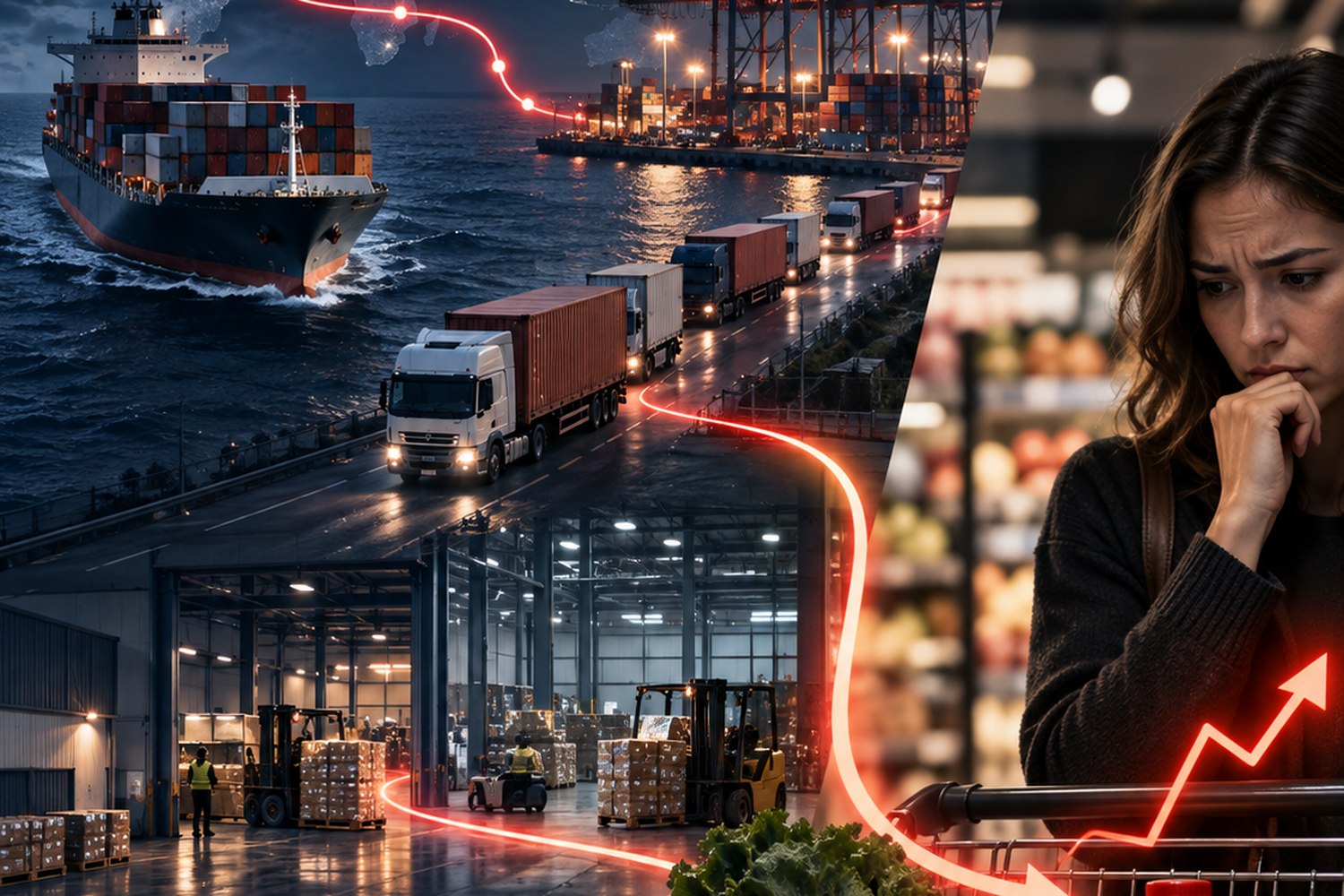
Could Beirut Become a Gateway Between India and Europe?
Lebanon's two main ports just joined the IMEC Ports Club. Here's what that could mean — and what it would take to get on the route.
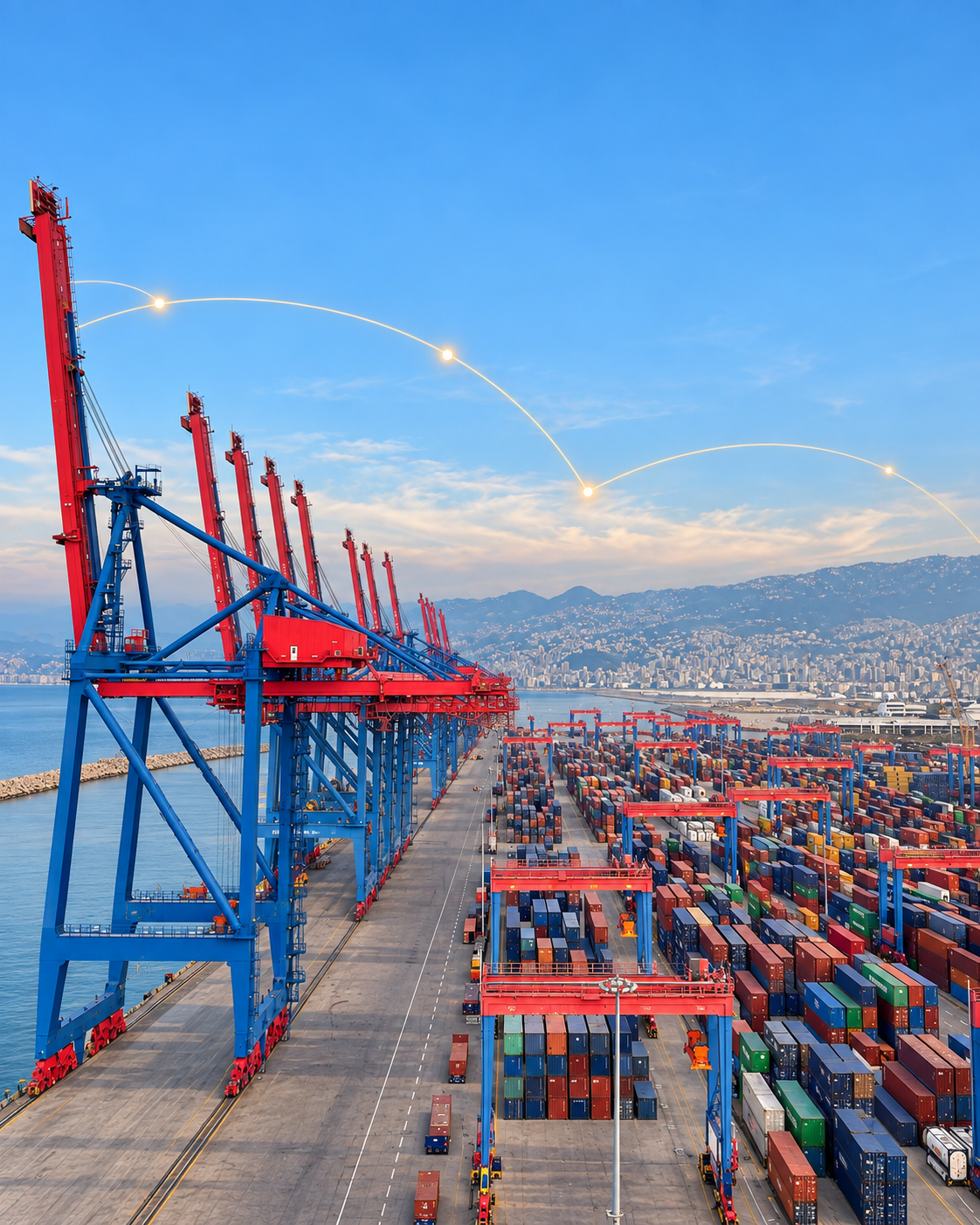
For most of its modern history, Beirut sold itself as the gateway between East and West. On 6 October 2026, that old pitch got a new chance. In New Delhi, the port authorities of Beirut and Tripoli signed the founding declaration of the IMEC Ports Club, a cooperation network tied to the India–Middle East–Europe Economic Corridor.
President Joseph Aoun called it an important institutional achievement. He's right. But a signature is not a shipping route. This piece separates what actually happened from what still has to happen before a single container from Mumbai is routed through Lebanon.
The facts: what was signed in New Delhi
The heads of the Beirut and Tripoli port authorities signed the joint declaration that launched the IMEC Ports Club. Lebanon is one of the few countries represented by two ports rather than one.
What IMEC is. The India–Middle East–Europe Economic Corridor is a proposed trade route announced at the 2023 G20 summit. Its founding partners are India, Saudi Arabia, the UAE, the United States, France, Germany, Italy and the European Union. The plan has two legs: an eastern one linking India to the Gulf by sea, and a northern one linking the Gulf to Europe by rail and sea.
What the Ports Club is. An open platform for dialogue between ports along the corridor, led by Marseille-Fos and Adani Ports. It covers four areas: connectivity and supply chains, trade facilitation, energy and decarbonisation, and digital data-sharing. Members exchange expertise and can launch pilot projects that scale up later. It does not create a new institution.
What it is not. The declaration allocates no cargo volumes to Lebanon, no funding and no operating timeline. Lebanon now has a seat at the table. It does not yet have a place on the route.
Where Lebanon fits: it wasn't on the original map
The 2023 blueprint looked roughly like this:
- India to the UAE — by sea
- UAE, Saudi Arabia, Jordan — by rail
- An Eastern Mediterranean port — by sea
- Europe
Lebanon was not part of it. In February 2026, President Aoun and Prime Minister Nawaf Salam formally asked France's IMEC envoy, Gérard Mestrallet, to include Beirut and Tripoli. Salam framed it as both an opportunity and an urgent necessity, given how fast neighbouring ports are moving. In early October, Mestrallet confirmed that Lebanon, Oman, Egypt, Greece and Cyprus have all expressed interest, with a ministerial meeting on expansion expected later in 2026.
The pitch. Beirut and Tripoli would act as additional Eastern Mediterranean terminals: extra capacity and short-sea links on a route the region still has to build. The two ports could complement each other. Beirut brings the country's main trading ecosystem of freight forwarders, insurers, banks and customs brokers. Tripoli brings space, a northern position and a potential land link to the interior.
There is a political catch worth stating plainly. The original plan's main Mediterranean gateway was Israel's port of Haifa, and Lebanon remains technically at war with Israel. How Lebanese ports would plug into the corridor in practice is still unclear.
The upside, if it works: a port is an economy
Ships are the visible part. The value sits in everything around them.
- Transit trade. Cargo moving between Asia, the Gulf and Europe pays fees, handling charges and storage at every stop.
- Logistics jobs. Warehousing, freight forwarding, marine insurance and customs brokerage are skilled, service-sector jobs Lebanon already knows how to do.
- Investment. A credible corridor role attracts capital for terminals, roads and digital port systems that the state cannot fund alone.
- Energy and data. IMEC is not only about goods. It also covers clean-energy links and undersea data cables, both of which need landing points on the Mediterranean.
These are possibilities, not commitments. No Lebanese route, budget or timeline has been agreed.
What it would take: corridors pick the ports that are ready
Geography gives Lebanon an argument, not a monopoly. Corridors exist to cut cost, time and risk, and they will route around any country that adds more of all three. Five things decide whether Beirut and Tripoli make the cut.
- Stability. Shippers price risk before they price distance. Insurance premiums, war-risk surcharges and the chance of a sudden closure can wipe out any geographic advantage.
- Fast, digital customs. Clearance should take hours, not days. The Ports Club's focus on data interoperability matters here: documents entered once and shared across ports, instead of re-keyed at every stop.
- Land links. A port without roads and rail behind it is a dead end. Lebanon has no corridor-specific land network funded yet, and any eastward link depends on Syria and border relations.
- Transparent port governance. Investors need predictable rules, clear revenues and audited accounts before they underwrite terminals. After the 2020 explosion, this is where Beirut has the most to prove.
- Speed. The corridor map can be finalised without the slow movers. Greece, Cyprus and Egypt are pitching for the same role.
The practical next step is for the government to turn membership into a list of concrete, bankable projects, and to decide what each port is for: transshipment, storage, regional distribution, or logistics services.
The question: on the route, or just next to it?
Joining the Ports Club is a real step. It puts Beirut and Tripoli in the room where corridor standards, data systems and pilot projects get decided, and it exposes Lebanese ports to the benchmarks of their competitors.
But the test starts now. Success will look like pilot projects launched, customs systems connected and shipping lines actually choosing Lebanese docks. Geography gave Lebanon the coastline. Readiness decides whether the cargo comes.
Sources
- 1.LBCI — IMEC Ports Club brings Lebanon's Beirut and Tripoli ports into wider trade network
- 2.LBCI — Aoun says Beirut and Tripoli ports joining IMEC Ports Club is key step for Lebanon
- 3.Daily Beirut — Beirut Port Joins the India-Middle East-Europe Economic Corridor
- 4.Al Arabiya — Lebanon expresses interest in joining US-led IMEC
- 5.Libnanews — Beirut and Tripoli in the India–Middle East–Europe corridor: an open door, not yet a commercial road
- 6.IASPoint — Strategic Expansion of IMEC Corridor
Educational content. This article is general information, not personalised investment, accounting, legal, tax or financial advice, and no outcome is guaranteed. Check anything important against your own circumstances and a qualified professional. Full disclaimer.

Mike Sader
Master's in Finance and class valedictorian at USJ Beirut, then around four years of Big Four external audit across banking, energy and management services. I write about money, careers and business for people who want the reasoning, not the buzzwords.
More about meGet the newsletter
A short email when something is worth understanding. No noise, no hype, unsubscribe in one click.